owner
Variable Frequency Drive Harmonics and Mitigation
A discussion of the benefits of variable frequency drives often leads to a question regarding electrical harmonic distortion problems. When evaluating variable frequency drives, it is important to understand how harmonics are provided and the circumstances under which harmonics are harmful.
Harmonic Definition
In China, three-phase AC power typically operates at 50 hertz (50 cycles in one second). This is called the fundamental frequency.
A harmonic is any current form at an integral multiple of the fundamental frequency. For example, for 50-hertz power supplies, harmonics would be at 100 hertz (2 x fundamental), 150 hertz, 200 hertz, 250 hertz, etc.
What Causes Harmonics?
Variable frequency drives draw current from the line only when the line voltage is greater than the DC Bus voltage inside the VFD. This occurs only near the peaks of the sine wave. As a result, all of the current is drawn in short intervals (i.e., at higher frequencies). Variation in variable frequency drive design affects the harmonics produced. For example, variable frequency drives equipped with DC link inductors produce different levels of harmonics than similar variable frequency drives without DC link inductors. The variable frequency drive with active front end utilizing transistors in the rectifier section have much lower harmonic levels than variable frequency drives using diodes or silicon controlled rectifiers (SCRs).
Electronic lighting ballasts, uninterruptible power supplies, computers, office equipment, ozone generators, and other high intensity lighting are also sources of harmonic problems.
Rocks and Ponds
Obviously, the magnitude of the contributing wave forms has an effect on the shape of the resultant wave form. If the fundamental wave form (50 Hz) has a very large magnitude (5,000 amps) and the harmonic wave forms are very low (10 amps), then the resultant wave form will not be very distorted and total harmonic distortion will be low. If the harmonic wave form current value is high relative to the fundamental, the effect will be more dramatic.
In nature, we see this effect with waves in water. If you continually throw baseball size rocks into the ocean, you would not expect to change the shape of the waves crashing onto the beach. However, if you threw those same size rocks into a bathtub, you would definitely observe the effects. It is similar with electrical waves and harmonic distortion.
When you calculate harmonics you are calculating the effect of the harmonics on the fundamental current wave form in a particular distribution system. There are several programs that can perform estimated calculations. All of them take into account the amount of linear loads (loads drawing power through out the entire sine wave) relative to non-linear loads (loads drawing power during only a fraction of the sine wave). The higher the ratio of linear loads to non-linear loads, the less effect the non-linear loads will have on the current wave form.
Are Harmonics Cause Problems?
Harmonics that are multiples of 2 are not harmful because they cancel out. The same is true for 3rd order harmonics (3rd, 6th, 9th etc.). Because the power supply is 3 phase, the third order harmonics cancel each other out in each phase. This leaves only the 5th, 7th, 11th, 13th etc. to discuss. The magnitude of the harmonics produced by a variable frequency drive is greatest for the lower order harmonics (5th, 7th and 11th) and drops quickly as you move into the higher order harmonics (13th and greater).
Harmonics can cause some problems in electrical systems. Higher order harmonics can interfere with sensitive electronics and communications systems, while lower order harmonics can cause overheating of motors, transformers, and conductors. The opportunity for harmonics to be harmful, however, is dependent upon the electrical system in which they are present and whether or not any harmonic sensitive equipment is located on that same electrical system.
Understanding IEEE 519
IEEE (Institute of Electrical and Electronics Engineers) created a recommendation for calculating harmonics. The IEEE-519 standard provides recommended limits for harmonic distortion measured at the point of common coupling. The point of common coupling is the point at which the customer’s electrical system is connected to the utility.
Although the IEEE standard recommends limits for both voltage distortion and current distortion, specifications that reference a 5% harmonic limitation are generally referring to current distortion. In most cases, if the current distortion falls within IEEE-519 requirements, the voltage distortion will also be acceptable.
Determining compliance with IEEE-519 requires an actual measurement of the system during operation. Predicting compliance in advance often requires a system study that accounts for all electrical equipment (transformers, wires, motors, variable frequency drives, etc.) in the system.
Harmonic Terms
Total Harmonic Voltage Distortion – THD (V)
As harmonic currents flow through devices with reactance or resistance, a voltage drop is developed. These harmonic voltages cause voltage distortion of the fundamental voltage wave form. The total magnitude of the voltage distortion is the THD (V). The IEEE-519 standard recommends less than 5% THD (V) at the point of common coupling for general systems 69 kV and under.
Total Harmonic Current Distortion – THD (I)
This value (sometimes written as THID) represents the total harmonic current distortion of the wave form at the particular moment when the measurement is taken. It is the ratio of the harmonic current to the fundamental (non-harmonic) current measured for that load point. Note that the denominator used in this ratio changes with load.
Total Demand Distortion – TDD
Total Demand Distortion (TDD) is the ratio of the measured harmonic current to the full load fundamental current. The full load fundamental current is the total amount of non-harmonic current consumed by all of the loads on the system when the system is at peak demand. The denominator used in this ratio does not change with load. Although TDD can be measured at any operating point (full or part load), the worst case TDD will occur at full load. If the full load TDD is acceptable, then the TDD measured at part load values will also be acceptable. To use our rock analogy, the full load fundamental current is the size of our pond and the harmonic current is the size of our rock. (See Table 1.)
Short Circuit Ratio
Short circuit ratio is the short circuit current value of the electrical system divided by its maximum load current. Standard IEEE-519 Table 10.3 defines different acceptance levels of TDD depending on the short circuit ratio in the system. Systems with small short circuit ratios have lower TDD requirements than systems with larger short circuit ratios. This difference accounts for the fact that electrical systems with low short circuit ratios tend to have high impedances, creating larger voltage distortion for equivalent harmonic current levels. (See Table 2.)
Harmonics Mitigation
Some utilities now impose penalties for introducing harmonics onto their grid, providing incentives for owners to reduce harmonics. In addition, reducing harmonic levels can prevent potential problems to sensitive equipment residing on the same system. There are many approaches to mitigating harmonics. Several commonly used methods are discussed here.
Line Reactors
Line reactor adds reactance and impedance to the circuit. Reactance and impedance act to lower the current magnitude of harmonics in the system and thereby lower the TDD. Line reactors also protect devices from large current spikes with short rise times. A line reactor placed between the variable frequency drive and the motor would help protect the motor from current spikes. A line reactor placed between the supply and variable frequency drive would help protect the supply from current spikes. Line reactors are typically only used between the variable frequency drive and the motor when a freestanding variable frequency drive is mounted more than fifty feet from the motor. This is done to protect the motor windings from voltage peaks with extremely quick rise times.
Passive Filters
Trap Filters are devices that include an electrical circuit consisting of inductors, reactors, and capacitors designed to provide a low impedance path to ground at the targeted frequency. Since current will travel through the lowest impedance path, this prevents the harmonic current at the targeted frequency from propagating through the system. Filters can be mounted inside the VFD panel or as free standing devices. Trap filters are typically quoted to meet a THD(I) value that would result in compliance with IEEE-519 requirements if the system were otherwise already in compliance.
Active Filters
Some devices measure harmonic currents and quickly create opposite current harmonic wave forms. The two wave forms then cancel out, preventing harmonic currents from being observed upstream of the filter. These types of filters generally have excellent harmonic mitigation characteristics. Active filters may reduce generator size requirements.
Variable frequency drives using Active Front End Technology (AFE)
Some variable frequency drives are manufactured with IGBT rectifiers. The unique attributes of IGBTs allow the variable frequency drive to actively control the power input, thereby lowering harmonics, increasing power factor and making the variable frequency drive far more tolerant of supply side disturbances. The AFE variable frequency drives have ultra low harmonics capable of meeting IEEE-519 standards without any external filters or line reactors. This significantly reduces installation cost and generator size requirements. An AFE VFD provides the best way to take advantages of variable frequency drive and minimize harmonics.
Multi-Pulse Variable frequency drives (Cancellation)
There are a minimum of six rectifiers for a three phase variable frequency drive. There can be more, however. Basically manufacturers offer 12, 18, 24, and 30 pulse VFDs. A standard six-pulse VFD has six rectifiers, a 12-pulse VFD has two sets of six rectifiers, an 18-pulse VFD has three sets of six rectifiers and so on. If the power connected to each set of rectifiers is phase shifted, then some of the harmonics produced by one set of rectifiers will be opposite in polarity from the harmonics produced by the other set of rectifiers. The two wave forms effectively cancel each other out. In order to use phase shifting, a special transformer with multiple secondary windings must be used. For example, with a 12-pulse variable frequency drive, a Delta/Delta-Wye transformer with each of the secondary phases shifted by 30 degrees would be used.
Source: <http://www.vfds.org/vfd-harmonics-and-mitigation-726582.html>
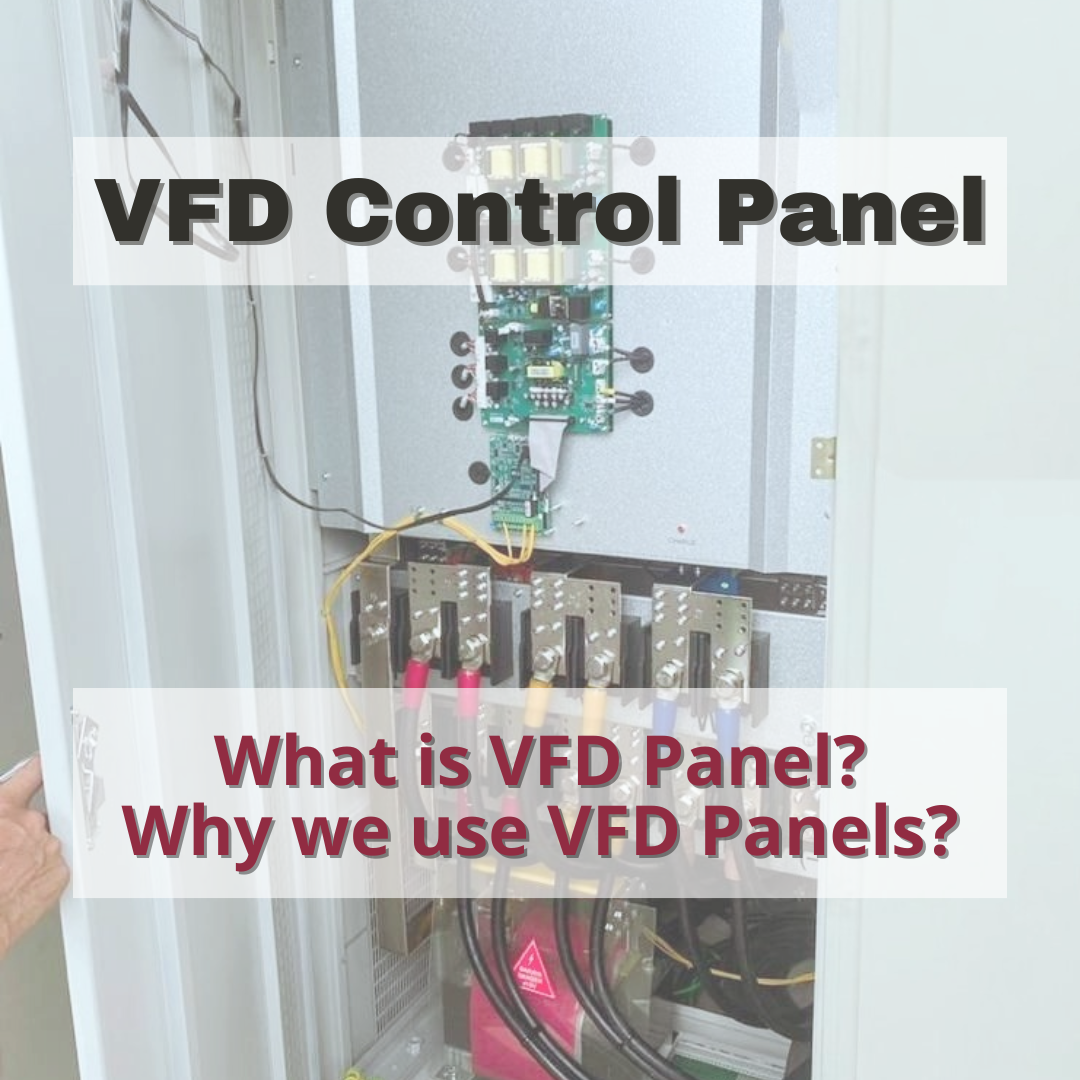
VFD Control Panel
VFD Control Panel
What is VFD Panel?
Variable frequency drive control panel (also named VFD panel, AC drive electrical control panel) is consisted of inner VFD inside the cabinet with external control, protect, display and other electrical, it’s an frequency conversion device to control three phase AC motor (including fans and pumps) in variable speed to save energy.
VFD panels adopt enclosed cabinet structure, generally, the protection class is IP20, IP21, IP30, and some panels may reach IP64, IP65 and even IP66 where the application environments need weatherproof, waterproof. The panels surface are coating spray by suppliers, and easy to install in parallel, the panel top configure bus and wiring the VFD keypad to the panel’s door for operating directly.
Variable speed drive is a dedicated component of the electrical control panel, the panel’s frequency convention and main features are depending on the inner VFD and other components configuration. VFD panels are different according to their different functions and applications, generally, it needs customized manufacture base on specified running environment, like in constant water supply panels (one panel control 1, 2, 3 pumps, etc.), escalators control panels, central air condition circulating pump panels, and fan’s control panels.
Why we use VFD Panels?
1, Power switching and protection
VFD panels are designed with a circuit breaker usually, which are connected to the input line power supply to switch the panel on/off, and provide protection when short circuit or overload occurs in the circuits and variable speed drives. In addition, VFD panels can disconnect power to ensure operator’s safety during motor maintenance.
2, Adjustable speed
A frequency control potentiometer is installed on the VFD panel’s door, to transmit command signals to the motor according to operator assigned. VFD panel has mains switching function to ensure the system continues operation in case of the variable frequency drive failed.
3, Visual control
VFD panel has display and operation panel on the front body, which is connected to the electrical components inside the control cabinet. It can display the panel’s operational status visually, and convenient for operator control the motor in actual field operations.
Manufacturers also equip with a variety of instruments and indicators inside the variable frequency drive panels, such as voltmeter, ammeter, frequency meter, and power indicator light, alarm lights, running lights, power frequency lights etc, which will monitor the VFD control panels working status in real time.
4, Security protection
Include variable frequency drive, all other electrical components are integrated inside the VFD panel, thus reducing the impact of external environment to the electrical components, and ensure the operator safety level like reducing shock hazard rate, so it has a better safety protection function.
Typical applications: water supply, air compressors, central air conditioning, port machinery, machine tools, boilers, paper machinery, food machinery and so on.
Source: <http://www.vfds.org/vfd-panels-321225.html>
Variable Frequency Drive Energy Saving
Energy can be saved in a VFD by reducing the losses in the electric motor or by reducing the energy consumption of the variable frequency drive. In addition, the generator energy generated during braking operation can be used instead of converting it to heat.
Variable frequency drive energy saving options
The variable frequency drive offers the following energy saving options:
- Standby mode of variable frequency drive
- Standby mode of operator panel
- Energy saving function: The operating point of the motor is optimized so that the power consumption is kept to a minimum.
- Quadratic V/f characteristic in the case of control of an asynchronous motor
- DC-link connection
- Energy-optimized braking
- PID controller (technology controller): When the reference value is reached, the motor is switched off.
- External DC 24 V power supply. Power supply can be switched off while the system is not in operation.
- Temperature-controlled fans
- Automatic switching frequency changeover
- In the variable frequency drive, special energy saving circuitry is integrated
Variable frequency drive energy saving function
The operating point of the motor is optimized so that the power consumption is kept to a minimum and energy saving is maximized.
The energy saving function is suitable for:
- partial load operation of a VFD
- VFDs without high or frequent load variations
The energy saving function is not suitable for operation of a synchronous motor.
Variable frequency drive sensorless control (V/f characteristic)
In the case of the sensorless control of an asynchronous motor according to the V/f characteristic, the optimum operating point of the motor is adjusted in order to keep power consumption to a minimum.
Variable frequency drive sensorless field oriented control (FOC)
In the case of the field oriented control of an asynchronous motor, the optimum operating point of the motor is adjusted in order to keep power consumption to a minimum.
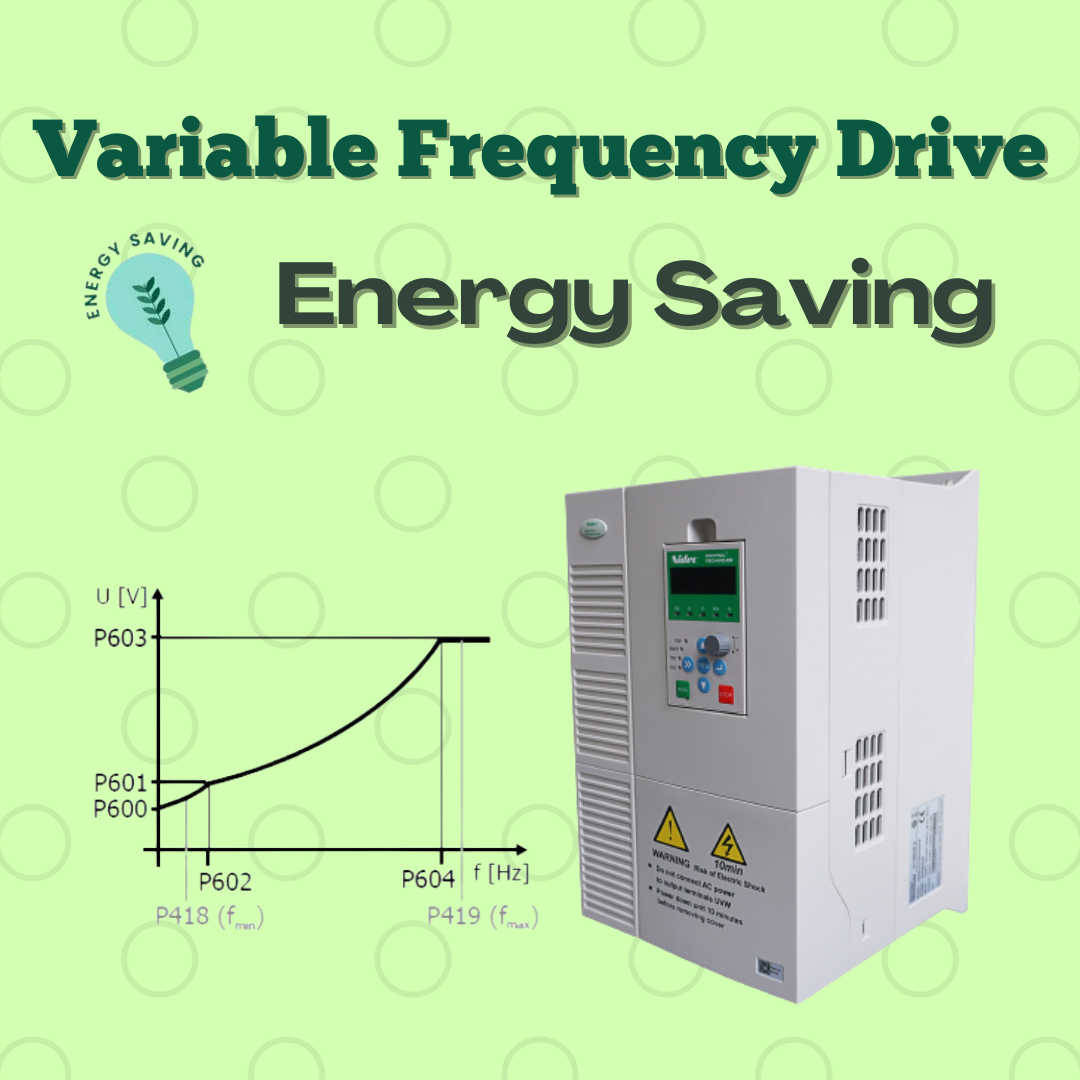
Quadratic V/f characteristic
For applications where the torque increases quadratically to the speed, e.g. control of a fan, the power consumption can be reduced and energy can be saved. In the low speed range where the full torque is not required, energy is saved.
The quadratic characteristic follows the function: |U| ~ f2.
After switching over to the quadratic characteristic, the characteristic is defined by the following parameters:
– Starting Voltage
– Voltage Rise
– Rise Frequency
– Cut-Off Voltage
– Cut-Off Frequency
Variable frequency drive standby mode
Standby reduces the power consumption of the variable frequency drive. The consumption is reduced and energy is saved.
The display of the operator panel is switched off if no button is pressed within the time set in parameter Time until Keypad Standby. VFD standby mode of the operator panel is indicated by a spot lighting up on the operator panel.
Standby mode is cancelled automatically is a warning or an error is signaled. VFD standby mode of the operator panel is switched off if Time until Keypad Standby is set to zero. In this case, the display is switched on permanently.
Standby Mode (variable frequency drive)
The variable frequency drive reduces power consumption if
– the standby mode of the variable frequency drive is switched on via parameter Standby Mode, and
– enable of the variable frequency drive via digital inputs STOA and STOB is switched off
Further energy saving options by variable frequency drives
DC-link connection
By DC-link connection of several variable frequency drives, energy can be saved, as the energy recovered when one motor is decelerated can be used for accelerating the other VFD. In this case, the acceleration energy does not have to be taken from mains supply.
If the deceleration energy from a motor is not used for accelerating the other motor it will be used for covering the consumption of the coupled variable frequency drives.
Energy-optimized braking
The voltage controller can be set up such that the kinetic energy recovered during deceleration operations is not converted to heat in a brake resistor. The brake ramp will be adjusted automatically such that the DC-link voltage does not exceed a certain value. The motor is decelerated in an energy saving way. The consumption of the variable frequency drive is covered by the deceleration energy of the VFD, so that no energy is taken from mains supply.
PID controller (technology controller): saving energy when the reference value is reached
The PID controller (technology controller) can switch off the motor when the reference value (PID desired set value) is reached. Saving energy is possible particularly in the case of asynchronous motors, as these motors consume the magnetizing current even when they are at a standstill. The function can be used for filling level controls, for example.
External DC 24 V power supply
Via an external 24V power supply, the control component of the variable frequency drive can be powered independent of mains supply. The variable frequency drive can be disconnected from mains supply via contactor, for example. Even with mains supply switched off, parameterization is still possible, the function of inputs and outputs and the communication are maintained.
The power consumption of the variable frequency drive during extended interruptions of operation can almost be reduced to zero.
Temperature-controlled fans
The VFD fans are controlled in two stages. This is done for the inside fan and the heat sink fan together. If the inside, capacitor or heat sink temperature set via Switch-On Temperature is exceeded, the heat sink fan and the inside fan are switched on at half power. The VFD fans will be switched off again as soon as the temperatures have dropped below the Switch-On Temperature 39 by 5 °C again.
If the internally defined maximum inside, DC-link capacitor or heat sink temperature thresholds are reached (5 °C below maximum temperature), the VFD fans are switched to full power. If the temperature drops to 5 °C below the switch-on threshold again, the fans return to the half-power stage.
Automatic switching frequency changeover
The power losses of semiconductor components depend on the switching frequency and the level of the switched current. In the case of a high current load, e.g. during VFD acceleration of high loads, the switching frequency of the pulse width modulation may be reduced temporarily in order to reduce the losses of the variable frequency drive. If the current drops again after the acceleration phase, a higher switching frequency will be set automatically.
Circuitry measures integrated in Agile
The following energy saving measures were integrated in the variable frequency drive and do not require any setup.
- The integrated power supply units supplying the internal assembles are optimized to ensure minimum power losses.
- Low-loss current measurement: The own consumption of the measuring system is optimized to ensure minimum power losses.
- Supply of optional communication modules: If no communication module is connected, energy supply to the module slot is switched off.
Source: <http://www.vfds.org/variable-frequency-drive-energy-saving-587641.html>
Variable Frequency Drive for Motor Protection
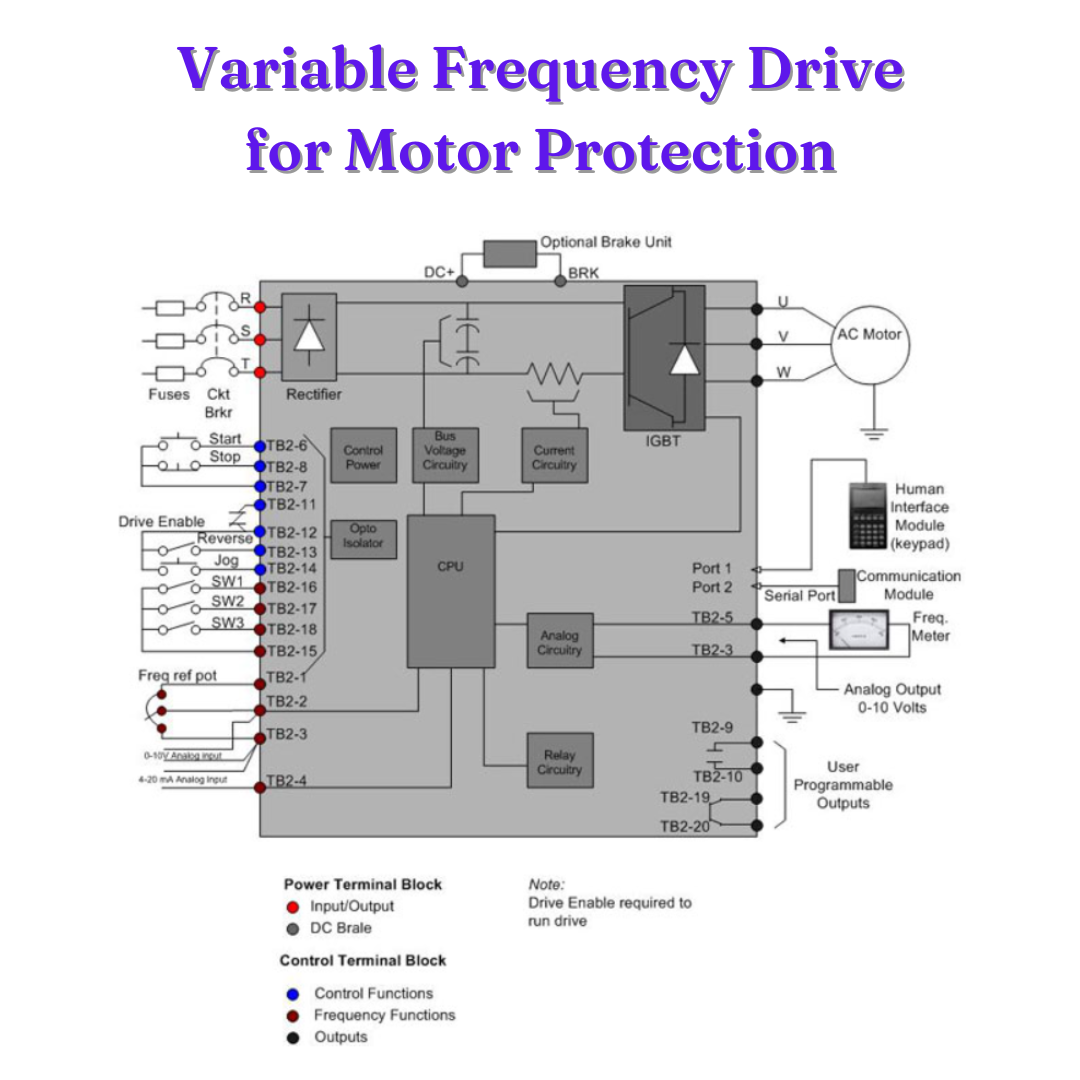
Variable frequency drives can operate as motor protection devices along with their role as motor speed controllers. Some variable frequency drives have short-circuit protection (usually in the form of fuses) already installed by the manufacturer, as shown in the variable frequency drive diagram. The selection & sizing of these fuses is critical for semiconductor protection in the event of a fault. The VFD manufacturer’s recommendations must be followed in installing or replacing fuses for the variable frequency drive to assure fast operation of fuses in case of a fault.
In most VFD applications the VFD itself provides overload protection for the motor. However, the feeder cable can’t be protected by variable frequency drive built-in protection. The motor VFD provides protection based on motor name plate information that is programmed into it. VFDs incorporate many complex protective functions, such as:
- Stall prevention
- Current limitation & overcurrent protection
- Short-circuit protection
- Undervoltage & overvoltage protection
- Ground fault protection
- Power supply phase failure protection
- Motor thermal protection through sensing of the motor winding temperature
When a variable frequency drive is not approved for overload protection, or if multiple motors are fed from the VFD, one or more external overload relays must be provided. The most common practice is to use a motor overcurrent relay that will protect all three phases & protect against single phasing.
With AC motors, there is excessive energy generated when the load drives the motor during deceleration, instead of the motor driving the load. This energy goes back into the VFD & will result in an increasing DC bus voltage. If the bus voltage goes too high, the VFD will be damaged. Depending on design, a variable frequency drive can redirect this excess energy through resistors or back to the AC supply source.
When dynamic braking is used, the VFD connects a braking resistor across the DC bus to absorb the excess energy. For smaller horsepower motors, the resistance is built into the VFD.
External resistance banks are used for larger-horsepower motors to dissipate the increased heat load.
Regenerative braking is similar to dynamic braking, except the excess energy is redirected back to the AC supply source. Variable frequency drives designed to use regenerative braking are required to have an active front end to control regenerative current. With this option the diodes in the converter bridge are replaced with IGBT modules. The IGBT modules are switched by the control logic, & operate in both motoring & regenerative modes.
DC injection braking is a standard feature on a number of VFDs. As the term implies, DC injection braking generates electromagnetic forces in the motor when the VFD in stop mode, injects direct cur rent into the stator windings-after it has cut off alternating current supply to two of the stator phases-thus turning off the normal rotating magnetic field. Most DC injection braking systems have the ability to adjust the length of time they will operate & the maximum torque they will apply. They generally begin braking when they detect that the motor is no longer receiving its run command & come equipped with hardware to prevent the motor from receiving another run command until the braking is finished.
Source: <http://www.vfds.org/variable-frequency-drive-for-motor-protection-444630.html>
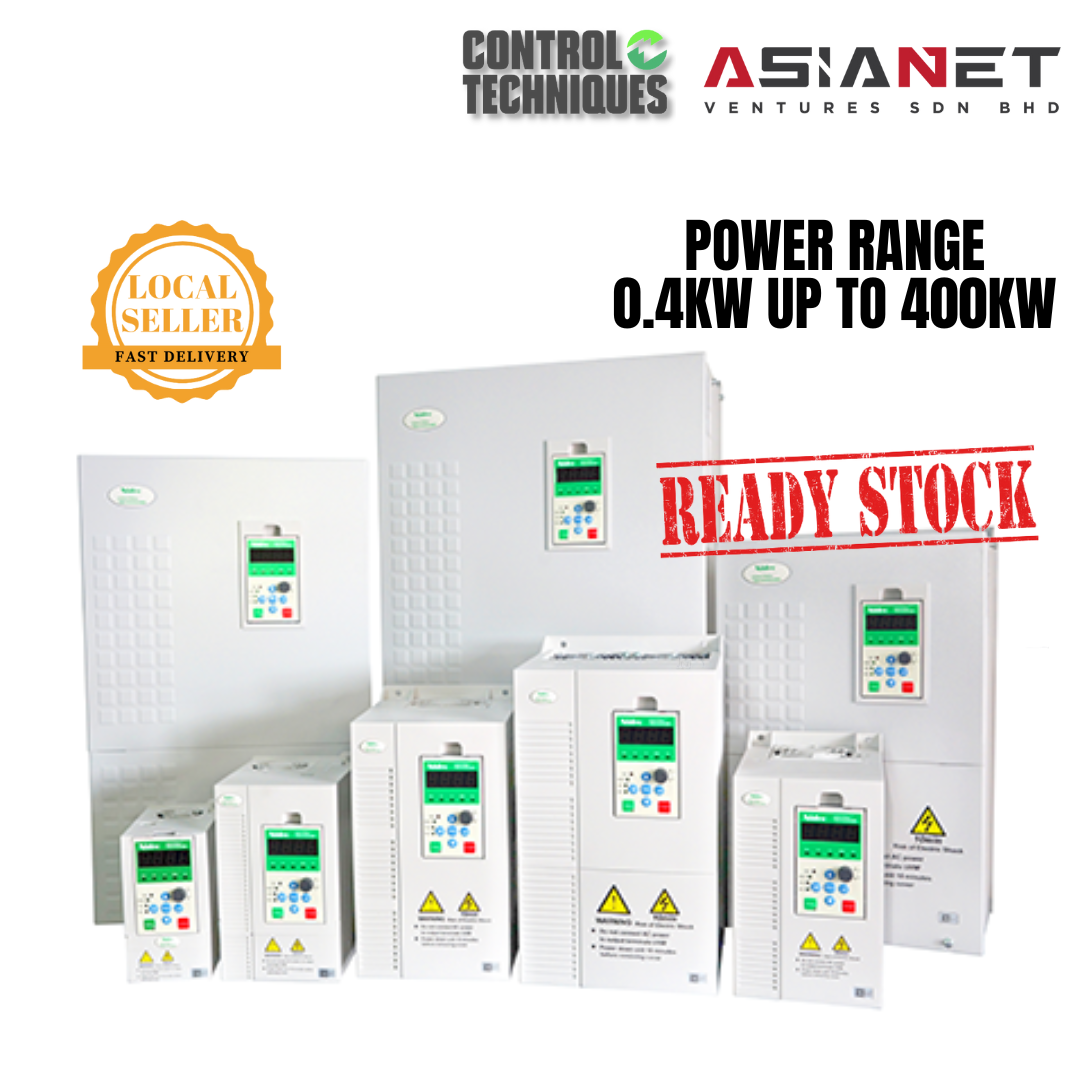
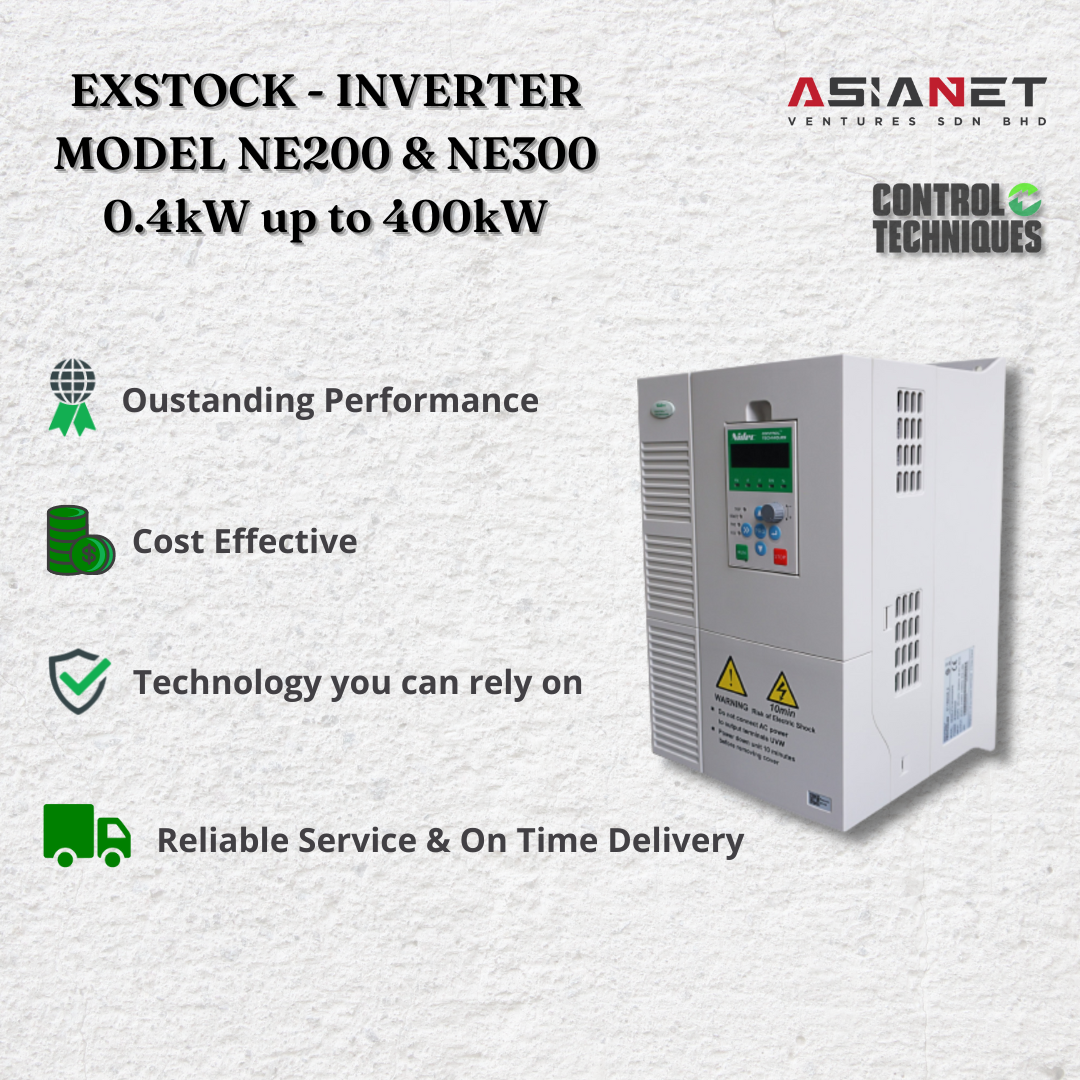
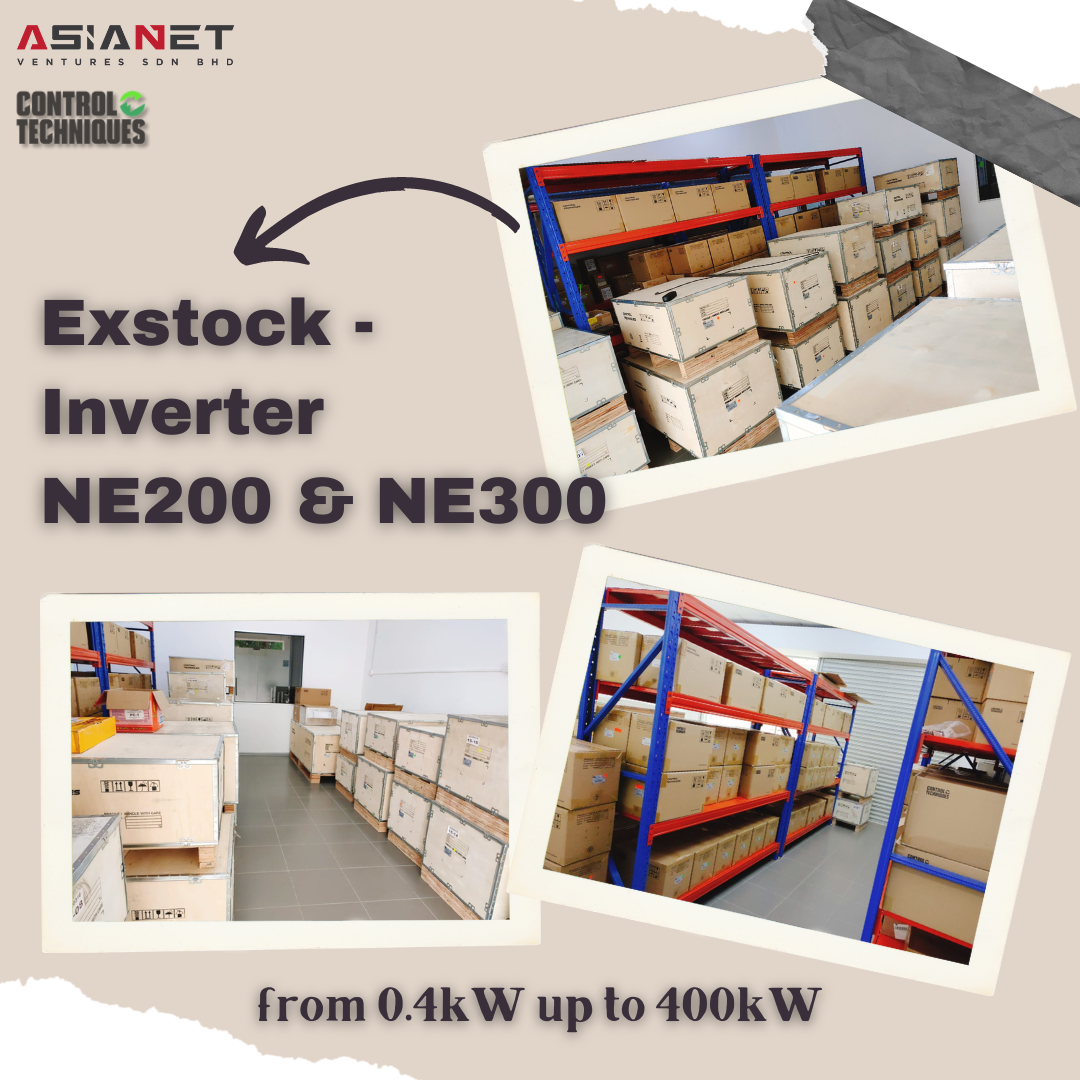
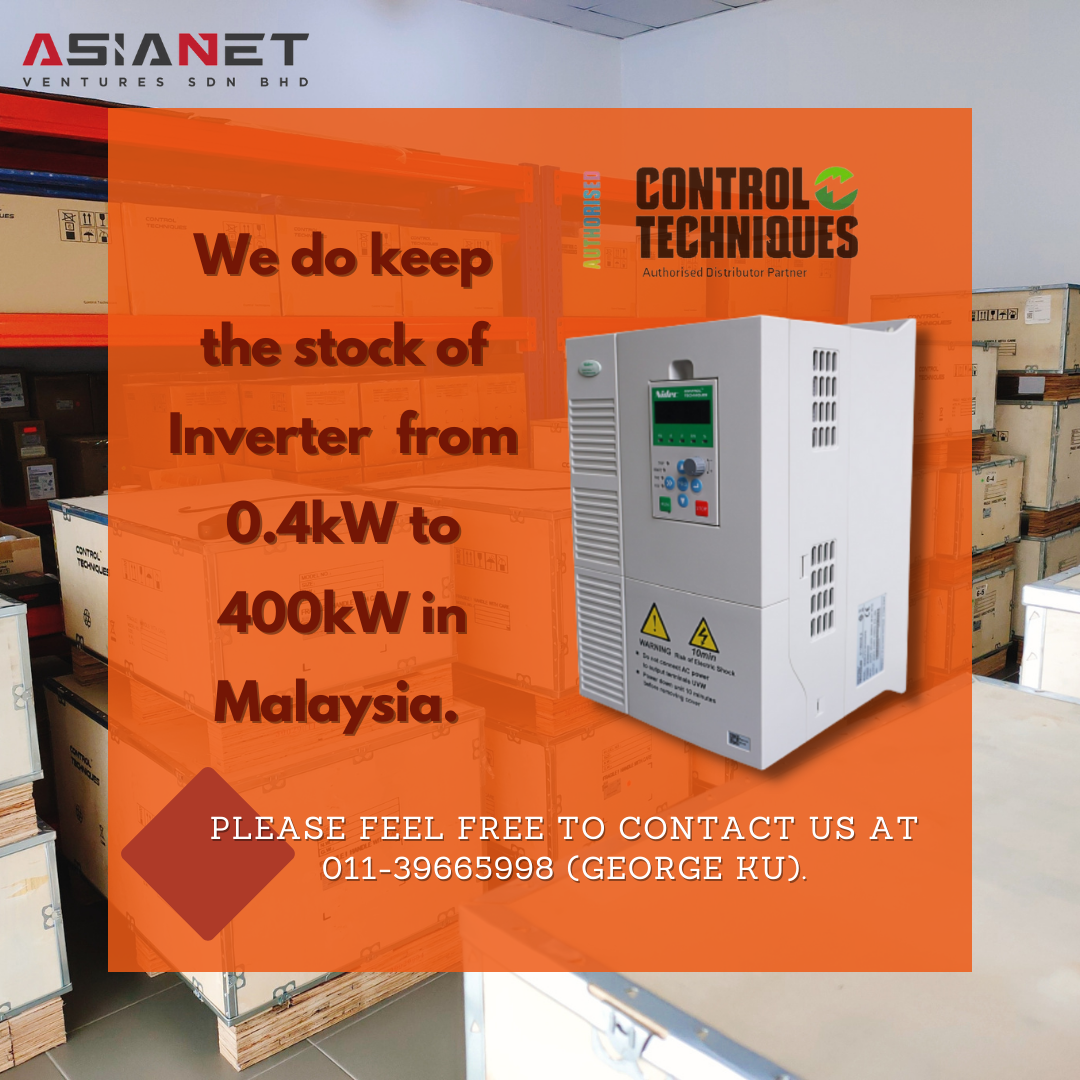
Need an inverter urgently? We have exstock from 0.75kW to 400kW.
If any requirement, please contact us:
______________________________
ASIANET VENTURES SDN BHD
Call / Whatsapp: 011-3966 5998
Email: info@asianetventures.com
Website: asianetventures.com
#Inverter #VFD #VariableFrequencyDrive #ACdrives #ControlTechniques #Nidec #JohorBahru #FastDelivery #Exstock
Please contact us at 011-39665998 (George Ku).
Having a hard time sourcing for existing stock inverters, with reliable quality, good cost-effective, and well-established brand name in Malaysia?
Please contact us!! 011-39665998 (George Ku) ✔OUTSTANDING PERFORMANCE ✔FAST DELIVERY ✔COST EFFECTIVE
Having a hard time sourcing for existing stock inverters, with reliable quality, good cost-effective, and well-established brand name in Malaysia?
Please contact us!!
011-39665998 (George Ku)
OUTSTANDING PERFORMANCE
FAST DELIVERY
COST EFFECTIVE
Having a hard time sourcing for existing stock inverters, with reliable quality, good cost-effective, and well-established brand name in Malaysia?
🔥Having a hard time sourcing for existing stock inverters, with reliable quality, good cost-effective, and well-established brand name in Malaysia? 🔥
Please contact us!!
011-39665998 https://wa.link/nvypby (George Ku).
✔OUTSTANDING PERFORMANCE
✔FAST DELIVERY
✔COST EFFECTIVE
Please contact us!! 011-39665998 (George Ku) ✔OUTSTANDING PERFORMANCE ✔FAST DELIVERY ✔COST EFFECTIVE
Having a hard time sourcing for existing stock inverters, with reliable quality, good cost-effective, and well-established brand name in Malaysia?
Please contact us!!
011-39665998 (George Ku)
OUTSTANDING PERFORMANCE
FAST DELIVERY
COST EFFECTIVE