AC Motor Braking

AC Motor Braking

There are several different methods useful for causing an AC induction motor to brake, or slow down:

  • DC injection
  • Dynamic braking
  • Regenerative braking
  • Plugging

DC injection uses the technique of energizing the stator windings with low-current DC instead of high-current AC as is the case when the motor runs. Dynamic braking works the motor as a generator, dissipating energy through a resistive load. Regenerative braking also works the motor as a generator, but instead of wasting energy in the form of resistive heating, a regenerating motor drive pumps that energy back into the power supply grid where it may be used by other loads. Lastly, plugging works by applying reverse power to the motor, and is the most aggressive means of bringing any motor to a halt.

All electronic motor braking techniques enjoy the advantage of mechanical simplicity. If the motor itself can be used as a brake, then a separate mechanical brake may not be needed. This simplifies the machinery of a system and potentially reduces maintenance costs.

A significant disadvantage of electronic braking techniques is that they all depend on the proper function of the motor drive, and in some cases the AC line power as well. If a VFD’s braking ability depends on the presence of AC line power, and that line power suddenly is lost, the VFD will have no braking capacity at all! This means a large motor might suddenly have no ability to brake in the event of a power outage or a tripped circuit breaker, which could be a serious safety issue in some applications. In such cases, one must ensure the presence of other (alternative) braking methods to function in the event of line power failure.

DC injection braking

If a spinning AC induction motor’s stator coils are energized with DC rather than AC, the rotor will find itself spinning inside a stationary magnetic field. This causes currents to be induced in the rotor bars, which in turn causes a braking force to develop in the rotor in accordance with Lenz’s Law. The effect is exactly opposite of what happens when a motor is energized from a stand-still: there, currents are induced in the rotor bars because the rotor is stationary and the stator field is rotating. This method of braking is quite effective, with only small amounts of direct current through the stator winding being necessary to cause a large braking torque.

The braking torque produced by DC injection varies directly with the magnitude of the DC injection current, and also directly with the speed of the rotor. This means the braking force created by DC injection tends to diminish as the motor slows down to a stop.

When any motor acts as a brake, the kinetic energy of the motor and the mechanism it attaches to must go somewhere. This is a basic tenet of physics, codified as the Law of Energy Conservation: energy cannot be created or destroyed, only altered in form. When DC injection is used to brake a motor, the braking energy is dissipated in the form of heat by means of the induced currents circulating through the rotor bars and shorting rings. This is something one must be careful to consider when choosing DC injection as a braking method: can the rotor safely dissipate the heat when needed? Repeated braking cycles, especially with little time between cycles, may overheat the rotor and cause damage to the motor.

Modern solid-state AC motor drives easily provide DC injection for braking. All they need to do is energize their output transistors in such a way that one or more of the stator windings sees a constant voltage polarity instead of an alternating polarity as is the case when the motor is running. The following diagram shows the power flow into the motor during DC injection:

The intensity of the DC injection current may be varied by altering the pulse-width duty cycle of the transistors used to switch the braking current.

Dynamic braking

If a powered AC induction motor spins at a speed faster than its rotating magnetic field, it acts as a generator: supplying power back to the voltage source, transferring kinetic energy from the spinning rotor and machinery back into electrical power. This makes for an interesting experiment: take an internal combustion engine, steam turbine, water turbine, or some other mechanical prime mover and mechanically force a powered induction motor to spin faster than its synchronous speed (i.e. force it to achieve a negative slip speed). If a power meter is connected between this motor and the AC line power grid, the meter will register negative power (i.e. power flowing from the motor to the grid, rather than from the grid to the motor).

This principle holds true for an induction motor powered by a VFD as well: if the rotor is spun faster than the speed of the rotating magnetic field produced by the VFD, it will act as a generator, sending back more power to the VFD than it receives from the VFD. Since the magnetic field’s rotational speed is variable – thanks to the VFD’s ability to synthesize virtually any desired frequency – it means an induction motor may be made to operate as a generator at almost any speed we desire.

When acting as an electrical generator, an induction motor requires an input of mechanical energy. That is, it will require mechanical effort to keep the rotor spinning faster than synchronous speed, since the motor naturally “wants” to spin at synchronous speed or slower. This means a generating motor acts as a brake, attempting to slow down whatever is keeping it spinning faster than synchronous speed. This braking effect is in direct proportion to how much the generated energy is used or dissipated by an electrical load. If we build a VFD to dissipate this energy in a controlled manner, the motor will have the ability to act as a dynamic brake.


In a VFD circuit, the “reverse” power flow received from the motor takes the form of currents traveling through the reverse-protection diodes placed in parallel with the output transistors. This in turn causes the DC bus filter capacitor to charge, resulting in a raised DC bus voltage:

Without a place for this energy to dissipate, however, there will be little braking effort, and the capacitor will be quickly destroyed by the excessive DC bus voltage. Therefore, in order for dynamic braking to work, the VFD must be equipped with a braking resistor to dissipate the received energy. A special transistor rapidly switched on and off to regulate DC bus voltage ensures the capacitor will not be harmed, and that the braking is effective.

This next schematic diagram shows how a braking resistor and its accompanying transistor could be added to the simple VFD circuit. Once again, the switching circuitry used to turn the braking transistor rapidly on and off has been omitted for simplicity:

The braking transistor switches on in direct proportion to the DC bus voltage. The higher the DC bus voltage, the greater the duty cycle (on time versus total time) of the braking transistor. Thus, the transistor functions as a shunt voltage regulator, placing a controlled load on the DC bus in direct proportion to its degree of over-voltage. This transistor never turns on when the DC bus voltage is within normal (motoring) operating range. It only turns on to clamp DC bus voltage to reasonable levels when the motor spins faster than synchronous speed.

With this braking circuit in place, the only action a VFD must take to dynamically brake an AC induction motor is simply slow down the applied AC frequency to the motor until that frequency is less than the equivalent rotor speed (i.e. create a condition of negative slip speed).

As with DC injection braking, the braking torque created by dynamic braking is a function of magnetic field strength and rotor speed. More precisely, it is a function of the Volts/Hz ratio applied by the VFD to the motor, and the magnitude of the negative slip speed. Braking torque is primarily limited by the braking resistor’s power rating and also the power rating of the VFD. Since the kinetic energy dissipation occurs outside the motor, there is little rotor heating as is the case with DC injection braking.

Regenerative braking

Regenerative braking takes the concept of dynamic braking one step further, in converting the DC bus over-voltage into usable AC power to be placed back on the AC line for other AC devices to use. Rather than regulate DC bus voltage via a shunt resistor switched on and off by a special

transistor, a regenerative drive manages the same task by augmenting the bridge rectifier diode array with a set of six more power transistors, then switching those transistors on and off synchronously with the line voltage (the AC power source). This line-synchronized switching takes the DC bus voltage and “inverts” it to AC so that the drive may send real power back into the AC power system from whence it originated:

Rectifier circuits equipped with a set of line-synchronized power transistors are often referred to as an active front end to the motor drive. The term “active” refers to the transistors (diodes are “passive” devices), and the term “front end” simply refers to the bridge being at the incoming (front) side of the VFD power circuit. In such a drive, the front end’s transistors are sequenced as needed to clamp the DC bus voltage to reasonable maximum levels, just like the braking transistor is pulsed in a drive with dynamic braking to shunt-regulate DC bus voltage. If DC bus voltage in a regenerating drive rises too high, the active front end transistors will pulse for longer periods of time (i.e. with greater duty cycles) to apply more of that braking energy to the AC power grid.

Regenerative braking enjoys the unique advantage of putting the kinetic energy lost through braking back into productive use. No other method of motor braking does this. The cost of doing this, of course, is increased component count and complexity in the motor drive itself, leading to a more expensive and (potentially) fault-prone VFD. However, in applications where the recovered energy is significant, the cost savings of regenerative braking will rapidly offset the additional capital expense of the regenerative drive.


A simpler and cheaper way to enjoy the benefits of regenerative braking without adding a lot of complexity to the VFD circuitry is to take multiple VFDs and simply connect their DC bus circuits in parallel. If one of the drives slows down its motor, the raised DC bus voltage will be available at the other motor drives to help them drive their motors.

The following schematic diagram shows two interconnected VFD circuits, with the upper drive braking and the lower drive motoring (driving):

The major disadvantage to regeneratively braking in this fashion is that the braking energy is only recoverable by the other motor(s) with their DC busses paralleled, and only at the exact same time one or more of those motors are braking. This is not as convenient or practical as AC line regenerative braking, where a virtually unlimited number of loads exist on the grid to absorb the braking energy at any time. However, for certain applications it may be practical, and in those applications the installed cost of the VFDs will be less than a comparable installation with AC line regeneration.


As with dynamic braking, motor heating is reduced (compared to DC injection braking) because the kinetic energy is dissipated elsewhere.

Plugging

Plugging is the most powerful method of braking an electric motor, consisting of actively applying power to the motor in the opposite direction of its rotation. This is analogous to reversing the engine thrust of a power boat or an airplane in order to quickly bring it to a halt. For a VFD, this means a reversal of phase rotation while carefully applying power to the AC induction motor.

Like DC injection braking, plugging requires power be applied to the motor in order to make it stop, and it also results in all the kinetic energy being dissipated in the rotor. The advantage held by plugging over DC injection braking is that the braking torque may be maintained and precisely controlled all the way to zero speed.

Source: <https://instrumentationtools.com/ac-motor-braking/>
Why V/f Ratio is kept Constant in VFD?

Why V/F Ratio is kept Constant in VFD?


VFD is used for speed control of induction motor to save energy and for better process control. Let us first understand the working of induction motor. The motor converts electrical energy into mechanical energy.

However, one more intermediate stage of conversion before converting the electrical energy into mechanical energy is the magnetic energy. Thus, the motor converts the electrical energy into magnetic energy and then the magnetic energy is again converted into electrical energy and finally to mechanical energy.

The motor has its rated magnetic energy handling capacity. The magnetic energy or air gap power depends on the flux. The core of the motor is designed to carry the rated flux. More than the rated flux should never be allowed to pass through the core.

V/f Ratio Constant in VFD

Let us see on what factors the magnetic flux of the motor depends.

If AC voltage is applied to stator of the induction motor, the flux is generated. The flux generated is in phase with the applied voltage.

Φ = Φm Sinωt

According to the Faraday’s law of electromagnetic induction, the self EMF induced generated in the stator is expressed as;

e = – N (dΦ/dt)

e = – N [(dΦm Sinωt/dt)]

e = – NwΦm Cosωt

e = 2πfN Φm Cosωt

e = Em Cosωt

Here Em = 2πfN Φm

RMS value of voltage induced;

erms = Em/2

erms = (2πfN Φm) /2

erms = 4.44 Φm f N

Φ = erms / 4.44 f N

Φ =e/f = v/f

Thus the flux generated in the stator depends on the ratio of the volt/Hz.

In VFD motor, speed is controlled by changing the frequency, as the speed of the motor is proportional to the frequency.

N = 120f/p

The speed of the motor can be changed by varying the frequency, however the voltage needs to be increased or decreased in the same proportion of the frequency to maintain the constant flux in the motor.

The PWM inverter of the VFD maintain the constant V/f ratio in order to maintain the constant flux in the motor. Suppose an induction motor of rating 440 volts,50 Hz is to be operated through VFD and if the speed is half of its rated speed, then PWM inverter output 25 Hz AC.

If voltage remains 400 volts then the ratio of v/f = 400/25 =16. The motor will experience double flux of its rated flux capacity in this case. Therefore when frequency is 25 Hz, the voltage will be 200 volts and v/f ratio is equal to 8.

What happens if flux is increased above the rated capacity?

Higher flux than its rated capacity leads to increased eddy current and hysteresis losses. The increased losses cause the heating of the core and as a result of this the insulation of core will get damaged.

Therefore, when motor running through VFD the V/f ratio is kept constant.

Source: <https://instrumentationtools.com/v-f-ratio-constant-in-vfd/>

Basic Concepts of the Safety Relay

Basic Concepts of the Safety Relay


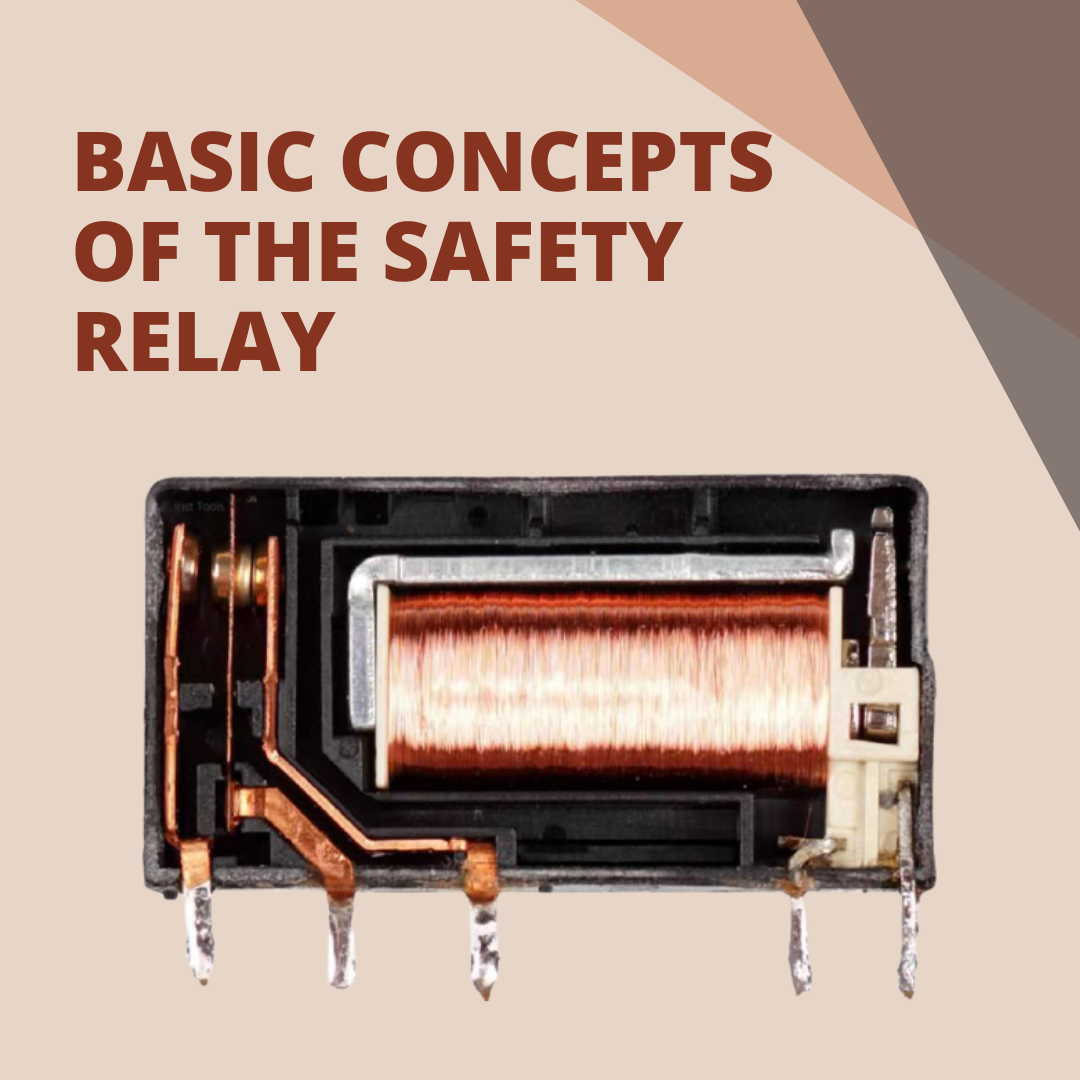
One of the most important components used in an electrical panel is a relay. A relay is an electromechanical switch that is electrically energized to operate its mechanical contacts. Basically, it separates two circuits and works as a contact between them.

Basics of Relay

Refer to the below image. A standard relay consists of 5 terminals.

The input circuit consists of two terminals – positive potential and negative potential.

The output circuit consists of three terminals – common (COM), normally-Open (NO), and normally-Closed (NC).

In de-energized condition, the contact is between COM and NC terminals. When the coil is energized, the contact is between COM and NO terminals. This is the basic concept of a relay.


This normal relay protects both the circuits from damaging each other.

For example, if any issue occurs on the input side, then only the input circuit will be affected. No damage would happen on the outputs side.

But, in today’s advances in automation and instrumentation, the safety of the environment and electrical components is a crucial factor in designing the system.

In a normal relay, as mechanical contacts are used, they may weld or jam with each other after repeated cycle operation.

It is a rare condition but if the safety of the panel and system is a main criterion, then a normal relay would prove dangerous in this situation. It will happen like the coil is energized, but the contacts have not switched.

So suppose if an emergency stop contact is used at the input side and the output side is connected to a PLC input, then the contact will not be detected and the system will thus not stop, even if the switch is pressed.

Many European and American standards avoid the use of a standard relay in their control panel.

Safety Relay

For this condition, a safety relay is used. A safety relay is more advanced and technical in operation as compared to a normal relay. This ensures that it can be used for a fail-safe environment.

Safety relays are defined and made to satisfy various SIL (Safety Integrity Levels) applications.

Let us see some of its highlights:

A safety relay has an in-built self-monitoring feature. That means, if the contacts weld or get jammed, the relay will automatically turn off the circuit contact at both the input and output sides.

This happens because the correct opening and closing of these relays are tested automatically inside it in each on-off cycle. This ensures that the safety function works even in case of its internal components failure. 

Safety relays can detect fault at the input circuit during a fault.

They are generally used in combination with various safety relays or you can say in multiple numbers; which guarantees a completely safe environment for the operator to use the machine.

A safety relay is generally used for critical field devices which require hardcore safety monitoring, like

  • light curtains,
  • safety mats,
  • three-position devices,
  • two-hand control devices,
  • magnetic switches,
  • emergency stop buttons,
  • non-contact safety sensors,
  • interlock safety switches etc.

Some relays have a reset button in it, much like overload relays. This ensures that the operator will first identify and rectify the faults, and then press the button to again bring it into operation.

Nowadays, they also have communication ports integrated with them (Ethernet, Modbus, etc.) to exchange electrical data with the PLC or other control equipment.

One of the main distinguishing factors from a normal relay are it’s forcibly guided contacts.

That means, even are the contacts are going into a weld or jam condition, they are forcibly and mechanically guided to change their position; so that the problem does not occur.

This ensures that both the NO and NC contacts always work opposite with each other; as in normal operation.

Choosing a safety relay requires a sound knowledge of risk assessment factors and technology. ISO 12100 is normally used for this.

In automation, if there is PLC, then there is no need to worry about safety. The program written will ensure all the equipment is operated properly.

But, in addition, if we use safety relays instead of a normal relay, the features discussed earlier will ensure a very safe environment; or you can say we can get a double safe environment.

Safety relays can detect wire breaks, faulty contactors, faulty safety actuators, short circuits, etc.

A safety relay detects wire breaks and faulty contactors/actuators by sending out electrical pulses through the wiring. By measuring the flow of current, the safety relay checks for welded contact sets and wire breaks.


Source: <https://instrumentationtools.com/basic-concepts-of-the-safety-relay/>

How to Control VFD with PLC using Ladder Logic?

How to Control VFD with PLC using Ladder Logic?

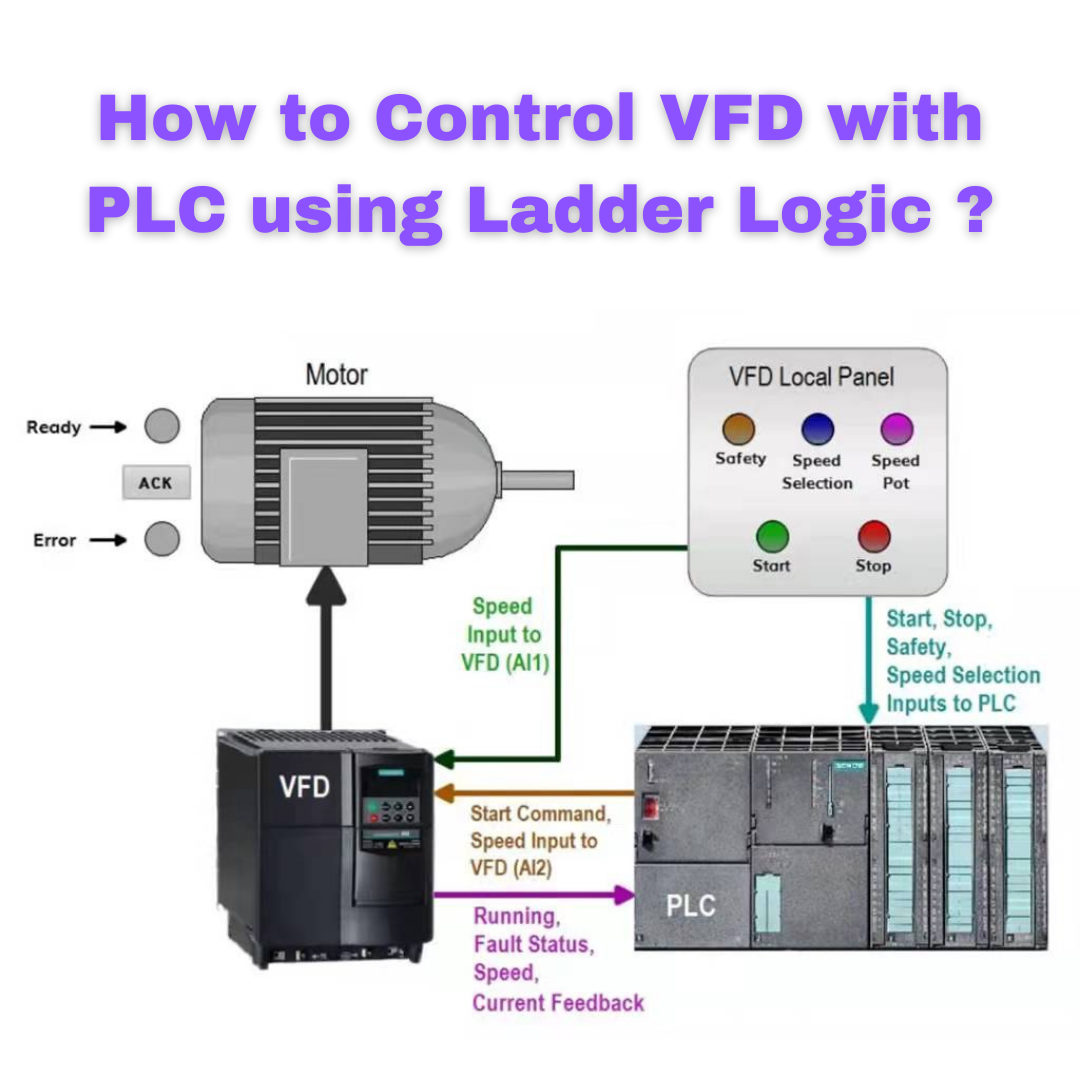
This is a complete tutorial about PLC ladder logic to control variable frequency drive (VFD) for motor speed control with speed selection from Field Local Panel or SCADA graphics.

Execution Steps :

  1. Prepare a Control and Power drawing
  2. Commissioning and Parameters Programming in VFD
  3. Prepare a PLC program
  4. Prepare a SCADA design

Commissioning and Parameters Programming in VFD

  • Commissioning is needed for the proper function of VFD.
  • Necessary parameter like Motor Nameplate details, Input Voltage, Motor Type, Frequency should be entered in VFD during quick commissioning.
  • After successful quick commissioning, now it’s a time to install the advanced commissioning. This commissioning is needed to give the details of all the digital and analog inputs and outputs, like
    • Information about Digital inputs of Start command and Speed Selection command
    • Information about Digital Outputs like Status of Drive Running and Drive in Fault etc.
    • Information about Analog Inputs like Speed Input 1 and Speed Input 2
    • Information about Analog Outputs like Current and Frequency of Motor

 PLC Program

In this Network 1, we are checking whether the VFD is ready to start. This signal will come when all the conditions are healthy as well as safety and power feedbacks are active.

In the Network 2, When start button is pressed, VFD Drive_DO bit will be set, if Ready_to_Start and No Error will be there.

This is the stop logic, When stop button is pressed it will reset the Drive_DO bit.

In this Network 4, this logic is required for safety as soon as Drive_DO bit will set and if any case VFD will not operate due to any fault then after predefined wait time, here we considered it as Run_FB_Time, it will reset the Drive_DO bit and generate Error.

This Error you can acknowledge from the SCADA after resolving the error from the field side.

In this Network 5, If the VFD is taking more current and gives overload error, then it will reset Drive_DO bit and generate Error.

This Error you can acknowledge from the SCADA after resolving the error from the field side.

This is the speed selection Digital output, if you select speed input as a local then it will not activate Speed Selection bit resulting Speed_DO absent and if you select speed input as a remote then it will activate Speed Selection bit resulting Speed_DO present.

This is the normal state of motor. There is no error as well as Ready bit is also in normal state.

Also the speed selection is in LOCAL mode.

This state shows that Ready bit is high and motor is running without any error.

There is an error bit is high and motor also showing error condition.

Note :

In some industries, Yellow color also used to indicate the error condition. Red color is used to indicate motor stop condition.

Source: <https://instrumentationtools.com/how-to-control-vfd-with-plc/>

What is Torque Boosting in Variable Frequency Drive (VFD)?

What is Torque Boosting in Variable Frequency Drive (VFD)?

What is Motor Torque?

Variable frequency variable voltage (VVVF) or VFD is popularly used for driving the squirrel cage induction motor where speed control is desired to control the process. Substantial power saving can be achieved if the VFD is used for driving the centrifugal fans, blowers, and water pumps.

First, let us understand what the torque of an induction motor is and why starting torque is important for driving the mechanical equipment. When we feed the AC supply to the stator of the induction motor, magnetic flux is set up in the air gap length and the rotor voltage is induced.

The rotor of the motor is short-circuited at the end rings, and thus rotor current starts flowing in the rotor. The torque is produced in the motor because of the interaction of the magnetic flux and the rotor current.

The torque of induction current can be expressed by following mathematical expression.

T = K Φ Ir cos Φ equation (1)

The flux produced in the motor is proportional to the stator supply voltage.

Φ ∝ V

The rotor current is proportional to the slip and the stator supply voltage. At start slip=1,

Therefore,

Ir ∝ V

T = KV2 equation (2)

From the above equation, it is clear that the starting torque of the induction motor is proportional to the square of the stator voltage. 

How VFD Controls the Speed of Motor?

The voltage induced in the stator coil is equal to;

E = 4.44 Φ f T equation (3)

Φ = E / (4.44 f T)

Φ = V / (4.44 f T)

Φ = V / f equation (4)

The flux produced in the stator is proportional to the ratio of V/f. The speed of the motor can be expressed by following mathematical expressions.

Ns = (120 f) / P equation (5)


Thus the speed of the motor is proportional to the frequency.

V/f ratio is maintained constant to deliver the rated torque at all the speeds up to the base speed of the motor. If the V/f ratio is maintained constant, the motor operates in the constant torque mode.

Why is High Starting Torque Required?

As per Newton’s laws of motion, the object which is in rest position tries to remain in its rest position if an external force is applied to it. This is called the law of inertia. The same principle applies when a motor drives a mechanical load.

The starting torque demand by the mechanical load depends on the combined moment of inertia of the motor and the driven equipment.

The more inertia, the more the starting torque required. If the motor does not supply the required starting torque then the motor will come to a stall.

How VFD can Operate the Motor to supply High Starting Torque?

VFD generally operates in the constant torque mode by supplying constant volt/Hz to stator of the induction motor.

The PWM inverter of the VFD increases the voltage and frequency in the same ratio, and thus the torque delivered by the motor remains constant.

For example, if the rated motor voltage and frequency of the motor are 400 volts and 50 Hz, then the V/f ratio is equal to 400/50=8. If the motor runs at half of its rated speed then the VFD output and frequency of the inverter are 200 volts and 50 Hz respectively and the V/f ratio is 200/25=8.

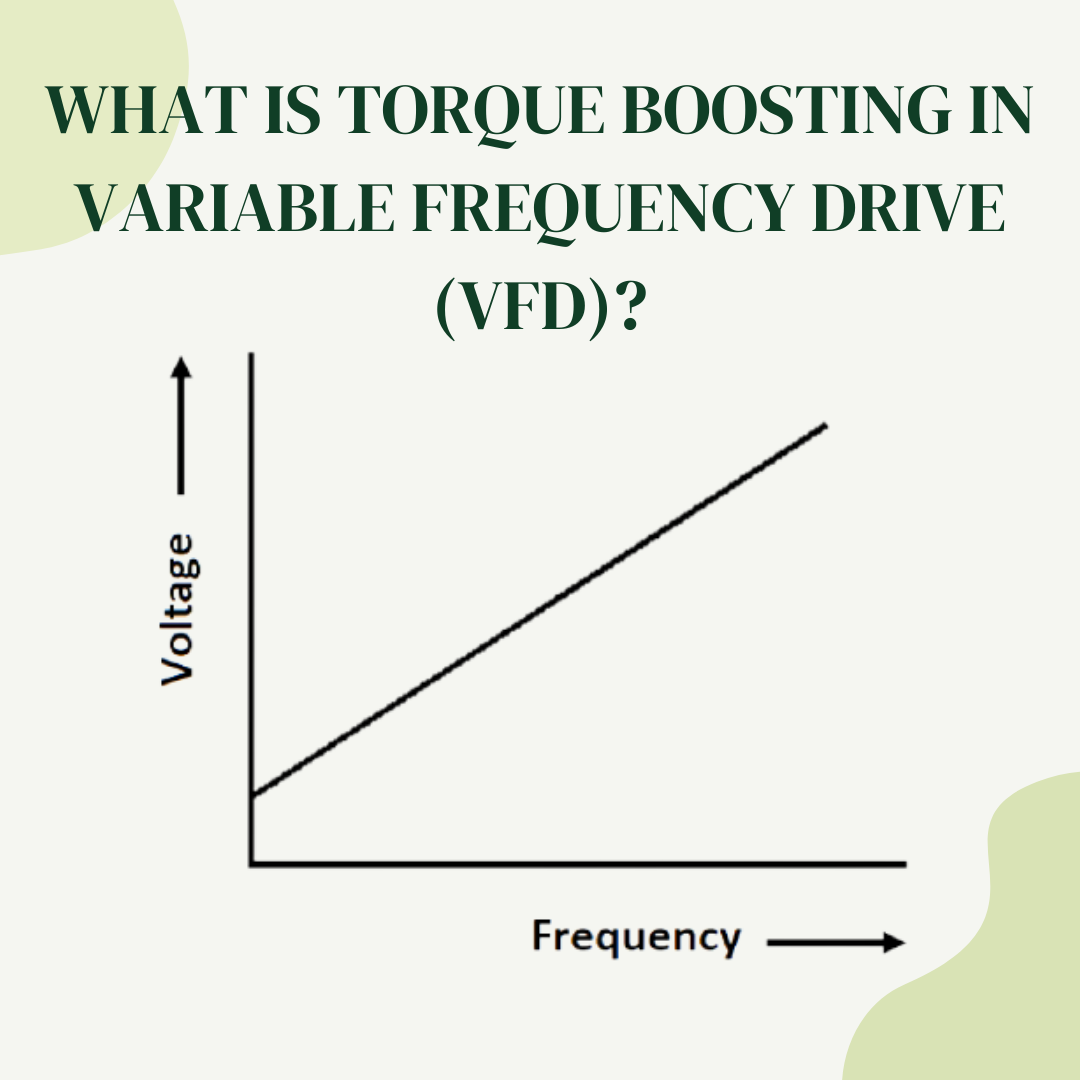
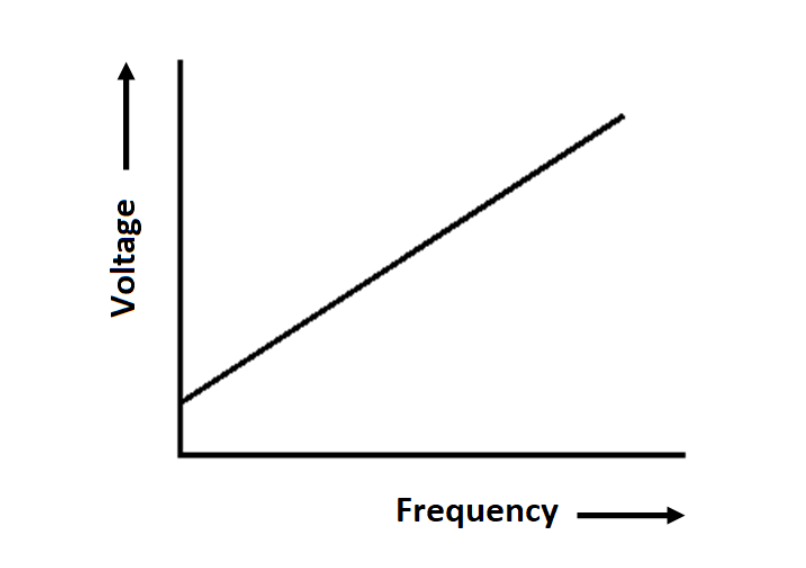
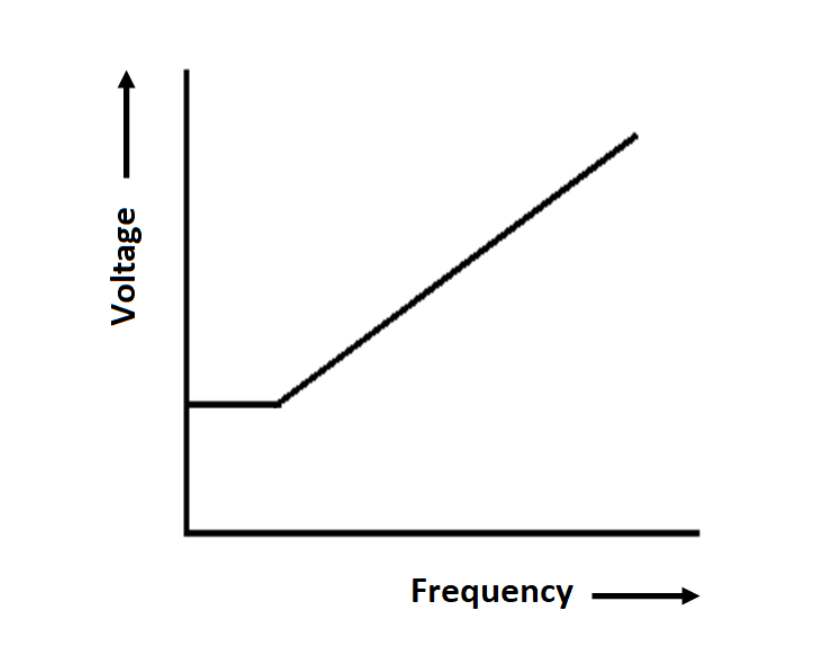
However, some types of loads demand high starting torque. To deliver the high starting torque, the v/f ratio of VFD output is deliberately made more than 8 for a definite time to generate more flux in the airgap.

More flux will lead to more torque than the motor-rated torque. V/f Pattern in the case of starting torque boosting is as given below.

In the above V/f pattern, the voltage and frequency ratio is kept initially more to get more starting torque delivery.

Thus, the high inertial loads can be started by programming the V/f pattern in VFD. This feature of VFD is known as Torque Boosting Feature.

Source: <https://instrumentationtools.com/torque-boosting-in-variable-frequency-drive/>

What is a Protective Relay? Principle, Advantages, Applications

What is a Protective Relay?

Principle, Advantages, Applications

A protective relay is a device that monitors system conditions like amps, volts, etc., using CTs and PTs and reacts to the detection of abnormal conditions.

Principle

A protective relay is an electrical component that is designed to trip a circuit breaker when a fault is encountered or identified.

The protective relay compares the actual real-time values against preset threshold values and sends electrical control signals to trip circuit breakers to clear an abnormal condition on the equipment it is protecting, alarm indications are sent to system control and sometimes other protection operations are initiated.

Protective Relay

A protective relay is required to satisfy four basic applicable functional characteristics:

1. Reliability

2. Selectivity

3. Speed

4. Sensitivity

Reliability

The relay should be reliable as a primary requirement. It must operate when it is required. There are various components that go into operation before a relay operates.

Hence, every component and circuit which is involved in the operation of the relay plays an important role; for example, the absence of suitable current and voltage transformers may result in unreliable operation.

Since the protective relays remain idle most of the time on the power system, proper maintenance will play an important role in improving the reliable operation of the relay.

In-separable reliability is a matter of design based on long experience. This can be achieved partly by:

  1. Simplicity and robustness in construction.
  2. High contact pressure.
  3. Dust-free enclosures.
  4. Good contact material.
  5. Good workmanship. 
  6. Careful maintenance.

Selectivity

It is the basic requirement of the relay in which it should be possible to select which part of the system is defective and which is not.

It should isolate the faulty part of the system from the healthy one.

Selectivity is achieved in two ways:

  1. Unit system protection
  2. Non-unit system of protection

Unit system of protection

In this type of system, the protection responds only to faults within its own area and does not make note of the conditions somewhere else.

Faults occurring elsewhere in the power system have no influence on the unit system and they are neglected.

Unit-type systems protect a specific area of the system.

Example:

The differential protection of transformers, transmission lines, bus bars, and generators.

Here the protection scheme will work only if the fault is in the transformer, bus bar, or the generator, transmission line relay separately.

Non-unit system of protection

In this system, the selectivity is obtained by the current settings of the relays at different locations, have no boundaries.

Protect their own designated areas and as well as zones overlapped also require protection.

All of which may respond to a generated fault.

Speed

A protective relay must operate at the speed it is required at. It should neither be too slow which can lead to damage to the equipment nor should it be too fast which can end in undesired operation during transient faults.

The shorter the time that a fault is allowed to persist on the system, the more load are often transferred between given points on the facility power system without loss of synchronization.

Sensitivity

A relay should be enough sensitive so that it operates reliably. It is expressed in terms of minimum volt-amps required for the relay operation.

Sensitivity depends on the settings we do for the protective relay to act.

Advantages of Protective Relay

  • Protective relay continuously monitors power system condition.
  • Improves system performance, system stability, system reliability.
  • Disconnects the faulty parts as quickly as possible, so as to minimize the damage to the fault parts themselves.
  • Detect system failures when they occur and isolate fault areas from the rest of the system.
  • Minimize risk of fire
  • Provide safety and protect people working on the system.

Applications

Overcurrent Protection

It is used for the protection of distribution lines, large motors, equipment, etc.

Distance Protection

It is used for protection of Transmission or sub-transmission lines.

Carrier-current Protection

It is used for the protection of the Extra High Voltage (EHV) and Ultra High Voltage (UHV) line.

Differential Protection

It is used for the protection of transformers, generators, motors of very large size, bus zones, etc.

Source: <https://instrumentationtools.com/protective-relay/#h-principle>

DC Injection Braking in VFD

DC Injection Braking in VFD

In this post, we will understand the types of DC injection braking and their uses in a VFD (variable frequency drive).

When using an AC induction motor with VFD, braking is a very important factor for using the motor efficiently. A lot depends on it and also decides the total amount of energy that the motor will dissipate and use.

VFD Braking Techniques

The four most commonly used braking techniques in a motor are

  1. Coast to stop,
  2. Ramp to stop,
  3. Regenerative braking and
  4. Dynamic braking.

Coast to Stop

Coast to stop means disconnecting the motor from the VFD output power supply.

This allows the motor to stop itself in a certain span of time; or you can say, just freeing the motor from the operation.

Ramp to Stop

Ramp to stop means applying deceleration time to the motor (ramp-down time set in VFD) to stop the motor in that time.

The motor is not disconnected at all in the ramp to stop.

Regenerative Braking

In regenerative braking, energy is generated back into the DC bus capacitors.

This method can stop the motor quickly in applications where the inertia is small or there is a significant friction load.

But, if the load inertia is very high, a large amount of energy will be generated in the capacitors and cause over-voltage.

Though the VFDs have a limit in overvoltage, exceeding the limit will generate a fault and trip the VFD.

Dynamic Braking

Dynamic braking is an extension of regenerative braking. When the voltage exceeds the limit, a dynamic braking resistor which is used across the bus will dissipate the extra energy in it. But, it increases the size of the system and also the complexity.

So, for high inertia loads, working at a high speed with them and using these methods for braking can cause some level of instability; as they will take more time to stop due to natural forces and can damage the nearby environment.

This causes the need to use DC injection braking for high inertia loads with rapid and safe stop action.

DC Injection Braking

Let us consider a simple theory for understanding this. An AC induction motor moves by a rotating magnetic field generated by the AC supply voltage. This field is induced in the rotor and causes rotation and torque at the motor shaft. When the voltage is removed, the motor will stop.

Now, going into our part; as we saw, if we induce a fixed magnetic field around the stator, then the motor stops. This can also be achieved by DC Injection braking.

DC injection is a method of applying DC (fixed) voltage in the stator windings. Refer to the below image for the study. In running condition, the S1 switch will be closed to supply alternating AC voltage to the windings.

When the stop command is given from VFD, the S1 switch will open first; and then after a delay, the S2 switch will close. This will apply fixed DC voltage in the windings.

Due to fixed potential, a fixed magnetic field will be developed around the windings and will stop the rotor motion immediately; due to the immediate application of high braking torque.

The amount of torque applied depends on the amount of voltage and current applied at the windings.

The switch control is precisely happened inside the VFD to avoid unwanted sparks or short circuit.

Uses of Braking

Consider another use of DC injection braking in the below image of a hoist system.

Suppose the system is in off condition and the hoist is at an upper level; holding the load. The brake is a mechanical device that is energized electrically to hold the motor tightly.

Now, if the brake fails electrically, the brake will not be able to hold the motor then and will thus indirectly release the hoist load. This can be imagined on how it can damage the environment or nearby personnel.

In stop condition, the load is moving and it can harm the system.

This can be overcome by DC injection braking. As you know, an encoder can be mounted with the motor side.

Connect the encoder to the VFD and program it in such a way that, when the VFD senses encoder counts in stop condition, DC injection braking logic will be activated.

So, as soon as the motor starts moving in stop condition, the VFD will start this braking and hold the motor immediately by inducing a high DC current.

But, remember that do not overtime this braking. A high amount of this braking can dissipate a large amount of heat in this system and cause damage.

So, generate an external alarm through VFD and alert the operators to come and check the system. They will immediately take action and bring the system to a safe state.

DC injection can be stopped either by a fixed time in the VFD or by power recycling the VFD.

So, DC injection is of great use for high-inertia and load motors. They can immediately stop the motor and bring the system to a safe operating condition.

Source: <https://instrumentationtools.com/dc-injection-braking-in-vfd/>

Understanding Braking Theory in VFD

Understanding Braking Theory in VFD

We all know that braking is nothing but a force that is applied to stop a movement. This logic is also used in VFD for proper control of a motor.

As we know, a VFD will drive the variable speed motor where it is used in the system. There are some applications where the load of the motor is such that it will move the motor without any command given to it.

Consider a hoisting system below. It is nothing but a hoist that is used to lift and drop loads; which you may have seen in under-construction buildings or factories.

The motor, driven by VFD, is used to rotate a drum which has ropes entangled on it to lift or drop a load as the drum rotates. Now, if the motor is in stop condition and consider a case where electromagnetic brakes are not available.

Due to heavy presence of load on the drum side, the gravitational force and the drum will cause the motor to rotate even if the motor is in stop condition.  

This can cause serious damage to personnel standing below the hoist or can collide with any nearby object in the environment.

To avoid this, mechanical brakes are used along with the motor to hold it in stop condition. The torque and force applied by it will be such that it can overcome the gravitational force and the heavy load of the system.

Normally, a mechanical spring force in combination with a friction disk is used to provide the holding torque. An electromagnet is used to overcome the spring force to allow the friction disk, which is connected to the motor shaft, to spin freely.

A contactor is used in the electrical panel to operate the brake output. This contactor is controlled by VFD output. That means related programming is done in VFD to control this brake output.

Programming is related to engagement (brake applied) and release (brake released) parameters. It is done to properly operate the brake with respect to motor.

If there is any malfunction in the sequence of operation of both the brake and motor movement, it can result in wear and tear of the components in the long-time run. This can cause degradation of the braking torque.

So, appropriate programming of the parameters is required in VFD related to brake logic. We will have a look at the most generally used parameters that do the controlling part.

Brake release frequency

This is the frequency at which the motor will run when brakes are released. It runs only for a specified time.

After this, the VFD will start ramping up. This provides sufficient torque to hold the motor without movement, equal to the static torque of load.

Brake engage frequency

This is the frequency at which the motor will run when brakes are engaged. It runs only for a specified time after ramp-down has started and reached this frequency.

After this, VFD will move to zero frequency. This provides sufficient torque to hold the motor without movement, equal to the static torque of load.

Brake engage delay

This is the delay after which brakes will be engaged.

Brake engage time

This is the time for which the motor runs at brake engage frequency with brakes engaged. After this, the VFD moves towards zero frequency.

Brake release time

This is the time for which the motor runs at brake release frequency with brakes released. After this, the VFD starts to ramp up.

Brake logic output

You need to assign a VFD digital output which will be connected to the brake contactor in the panel.

Current ramp time (Brake release)

This is the time for which current reaches equal to a set threshold value (starting current), after which brake is released. This time is allowed for magnetic flux to build up in the air gap of the motor.

Now, let us look at the flow of logic sequence. As soon as VFD run command is given, the current ramp time starts to allow the motor to reach brake release frequency.

As soon as this frequency is reached, brake contactor (brake logic output from VFD) goes off to release the brake and the motor runs at brake release frequency.

It will run like this for the set brake release time. After this time, the VFD starts ramping up towards the desired frequency set in VFD.

When stop command is given, the VFD starts ramping down towards brake engage frequency. Once this frequency is reached, brake engage delay time starts.

After this time, the brake contactor goes on to engage the brake, but the motor will still run at the brake engage frequency for brake engage time. After this time, the VFD will ramp towards zero frequency.

Due to all this control, it is ensured that the motor is operating in tandem with mechanical brakes for an efficient and safe operation.

Commissioning of such systems requires a sound knowledge of VFD parameters and motor working. Or else, it can damage the system.

Source: <https://instrumentationtools.com/understanding-braking-theory-in-vfd/>